
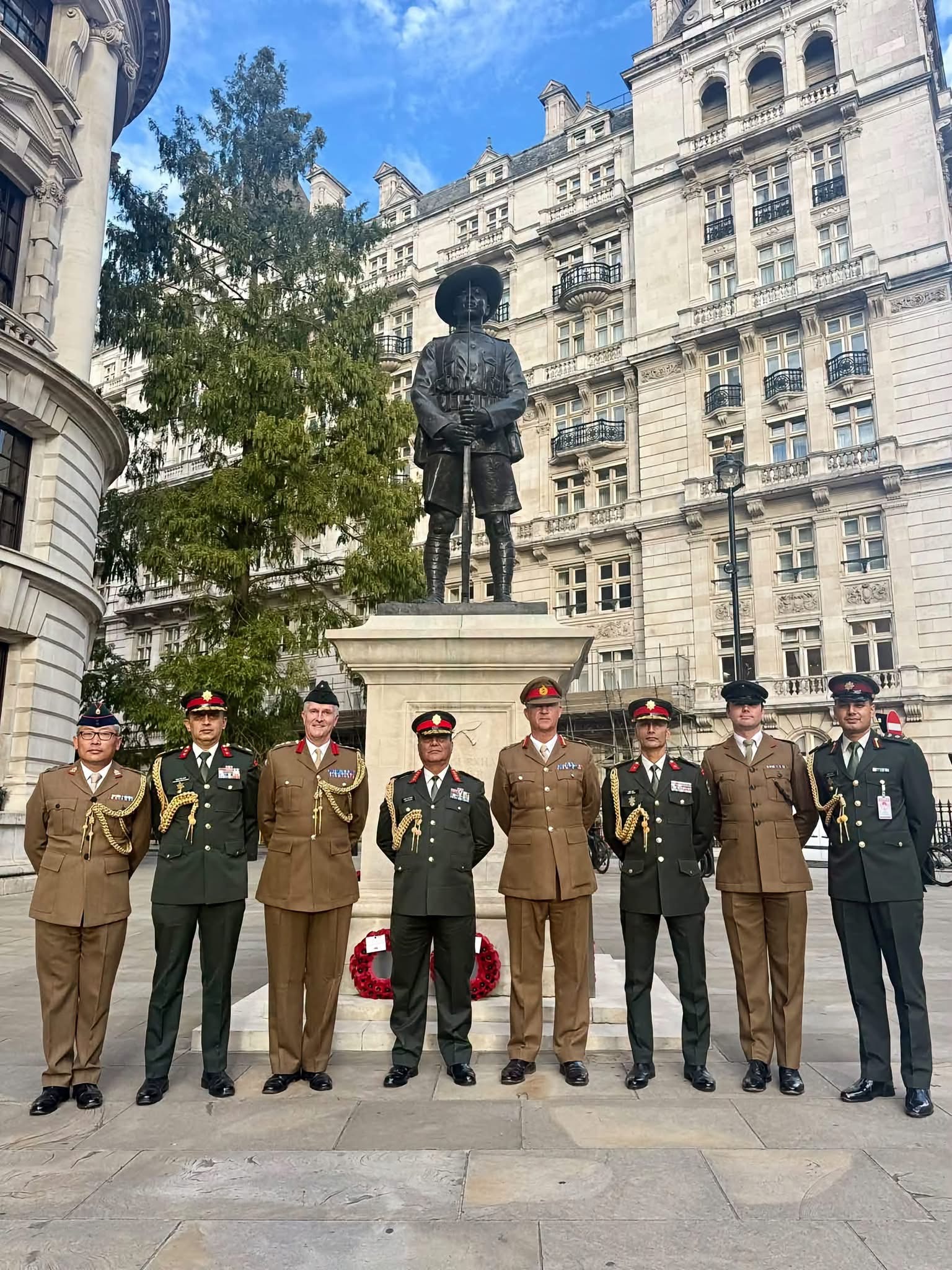
“Gurkhas are foreign soldiers.” That sentence can feel jarring to anyone whose family has served. A soldier can wear the uniform of another country and still carry Nepal, its language and the memory of home. At the same time, there is a real history behind the question. Nepalese men fought in armies shaped by empire, and their service should never be discussed as though colonialism and unequal treatment did not exist.
What is in the name?
Gorkha is a place with a central role in Nepal’s history. Gorkhali connects to the people and the army of that historical state; Prithvi Narayan Shah’s campaigns shaped the Nepal we know today. Gurkha became the familiar English spelling associated with Nepalese regiments serving overseas. These words have different histories and uses. People may reasonably prefer Gorkhali when speaking of Nepal’s own soldiers and heritage, while recognising that Gurkha is the established name of a particular military tradition abroad.
The disagreement should encourage us to learn more, rather than turn into an argument that erases the people themselves. Bravery did not begin when Britain named it. The defenders of Nalapani fought before a Gurkha was eligible for a Victoria Cross. No foreign medal is needed to establish their courage.
Service, sacrifice and a wider world
British Army histories record that more than 120,000 Gurkhas served during the First World War and more than 130,000 during the Second. They served in France, Gallipoli, North Africa, Italy and Asia. Many were killed or wounded. Their reputation grew through what they endured and did, not through a slogan. Rifleman Kulbir Thapa became the first Gurkha to receive the Victoria Cross in 1915; that award is one part of a much larger story.
For generations of people abroad, “Gurkha” was among the first words they associated with Nepal. That international recognition is meaningful. It should sit alongside an honest account of recruitment, war and the costs borne by families in Nepal. We can honour soldiers without glorifying every war in which they fought.
Recognition must extend beyond the battlefield
Gurungs, Magars, Rais, Limbus, Tamangs, Chhetris and people from other communities have served. Praise for their sacrifice rings hollow if Indigenous people or any other group face exclusion or prejudice in civilian life. Concerns about caste and ethnic hierarchies deserve a serious hearing, and conservative attitudes that deny people equal dignity deserve challenge. That is a call to examine institutions and behaviour, not to assign one belief to every person in a community.
We should be able to disagree about spelling, colonial history and the meaning of service without dividing people into camps. Remembering our forebears asks more of us than applause: learn their history, listen to their families, and make a fairer society for their descendants.
Respect also means investing in the Army we depend on
Nepal’s Chief of Army Staff, General Ashok Raj Sigdel, is visiting the United Kingdom at the invitation of British Army Chief General Sir Roly Walker. Their meeting highlights a longstanding military relationship. It should also make us ask a practical question at home: are we giving Nepal’s own soldiers what they need?
When earthquakes, floods or landslides strike, the public expects the Army to help immediately. Rescue teams need training, dependable communications, transport, medical support and equipment that works in Nepal’s terrain. Those capabilities do not appear by themselves. If we want a modern, prepared Army, we must be willing to invest in it.
That investment needs priorities and public oversight. Money should reach useful training, maintained vehicles and rescue tools, as well as the health and welfare of soldiers and their families. Clear accounts and careful procurement matter too. Spending wisely on personnel and emergency readiness would do more for the country than political waste or ceremonial promises.
The UK visit can strengthen cooperation. Its greater value would be to help Nepal turn discussion into a practical plan for its own people: one that improves disaster response, supports those who serve and explains the cost to the public.
Remember the past. Build a fairer future.
At Kohima, a memorial inscription asks those who return home to tell of those who gave their today for someone else’s tomorrow. That remembrance should make us thoughtful about the past and responsible for the future.
Our ancestors’ courage is not measured by a spelling or a foreign medal. Honour it by learning the full history, respecting every community that served, and ensuring the next generation has the opportunity and support it deserves.
Jai Gurkha. Jai Gorkha. Jai Gorkhali.